Sustainability design isn't a checklist
How Performance Improves
Sustainable design works best when it improves how a building performs day after day. We focus on practical decisions that reduce demand, optimize systems, limit waste, and create long-term value.
Reduce Energy Demand
Smarter planning can lower the amount of energy a building needs before systems are even selected.
- Building orientation and envelope consideration
- Efficient use of space
- Daylighting and passive design strategies
Improve System Performance
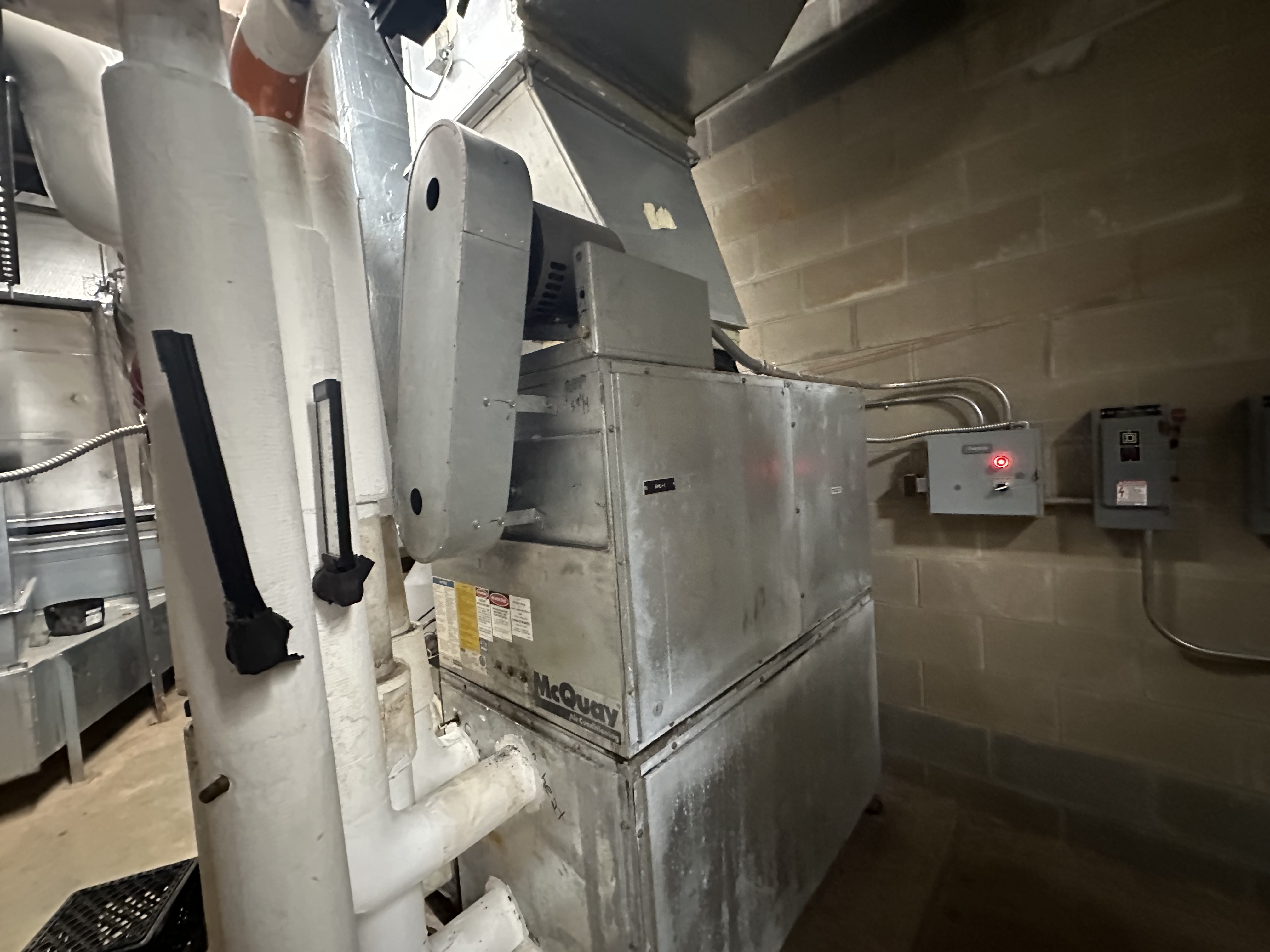
Efficient systems help buildings use less energy while maintaining comfort, reliability, and operational control.
- High-efficiency HVAC design
- Smart controls and automation
- Energy-efficient lighting systems
Lower Carbon Footprint
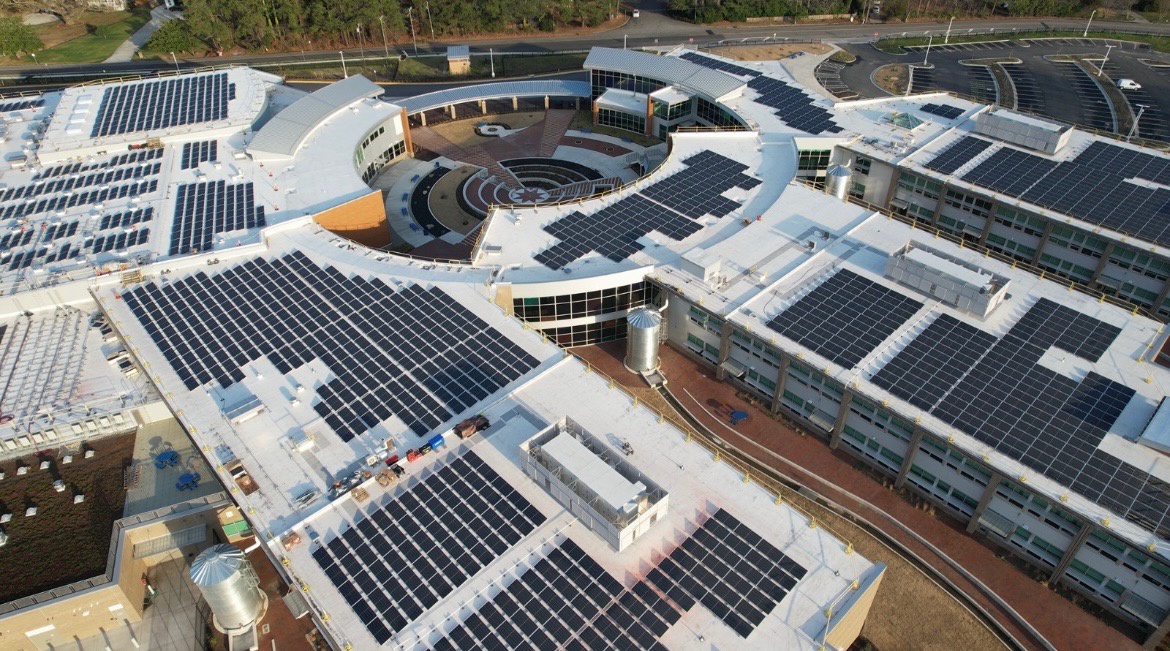
Thoughtful design decisions help reduce operational and embodied carbon throughout a building's life.
- Reduce operational carbon through efficient systems
- Evaluate embodied carbon in material selections
- Support electrification and renewable energy strategies

Deliver Long-Term Value
Sustainable decisions should support measurable benefits for owners, occupants, and building operations.
- Lower operating costs
- Longer-term system performance
- Stronger asset value over time

Sustainable Building Strategies
Practical, performance-driven strategies that help buildings operate efficiently, reduce long-term costs, and support healthier environments.
Sustainability in Action
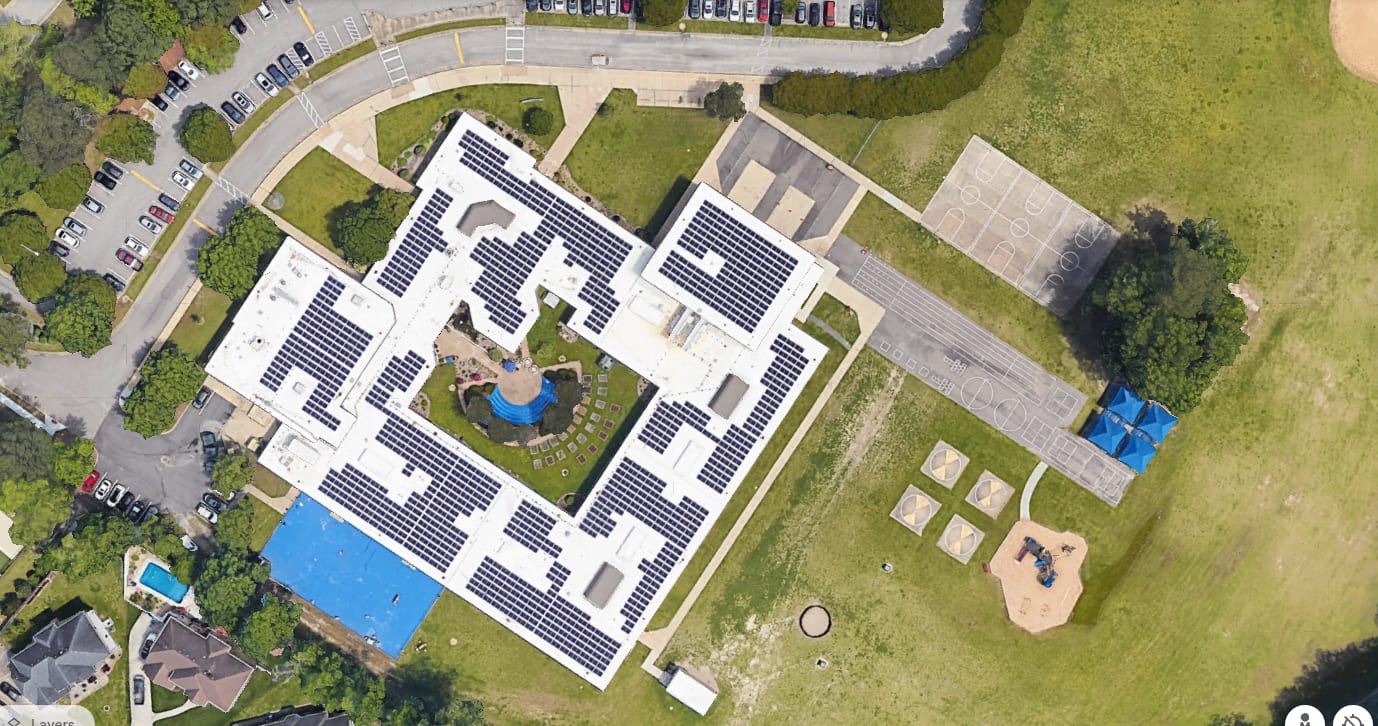
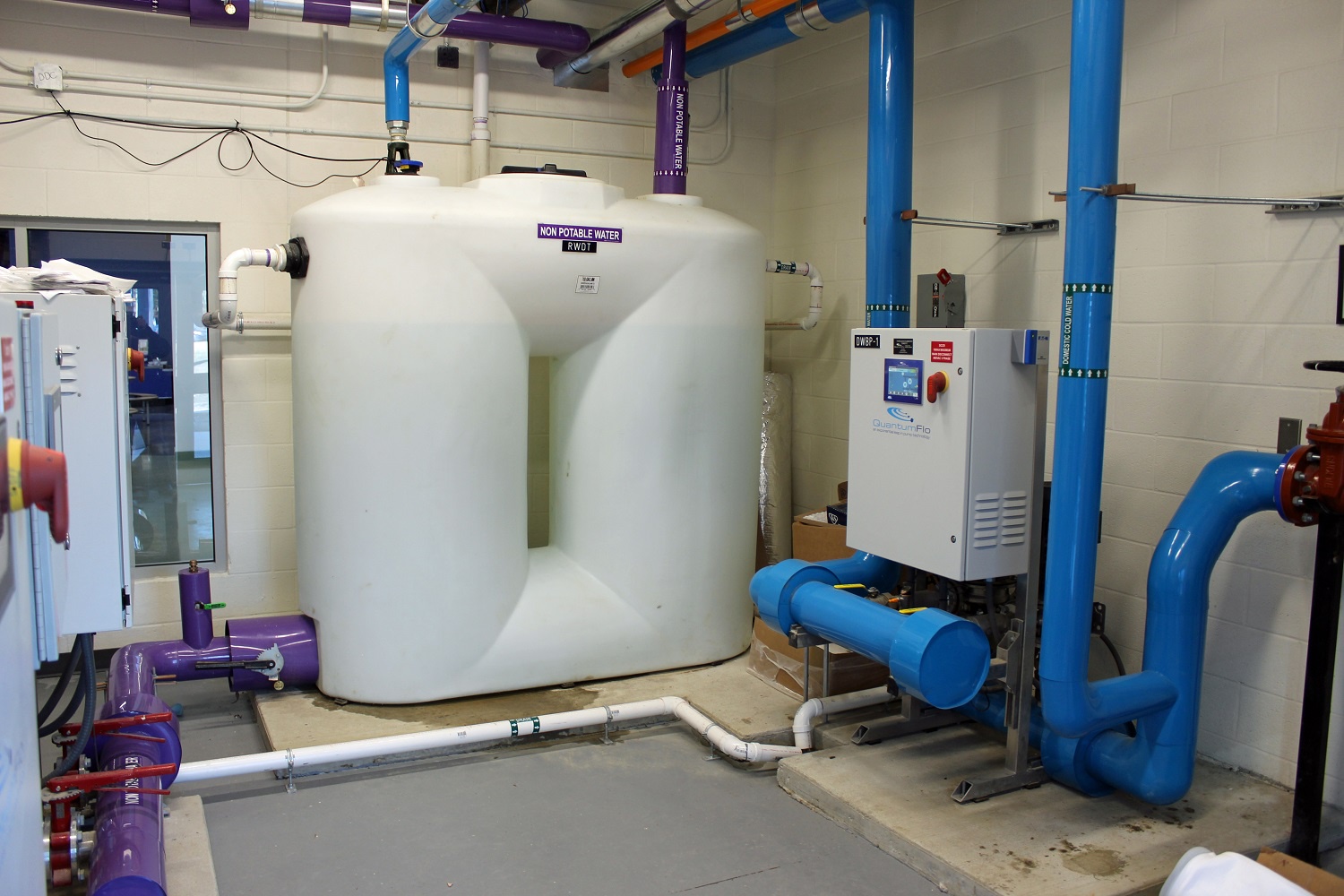
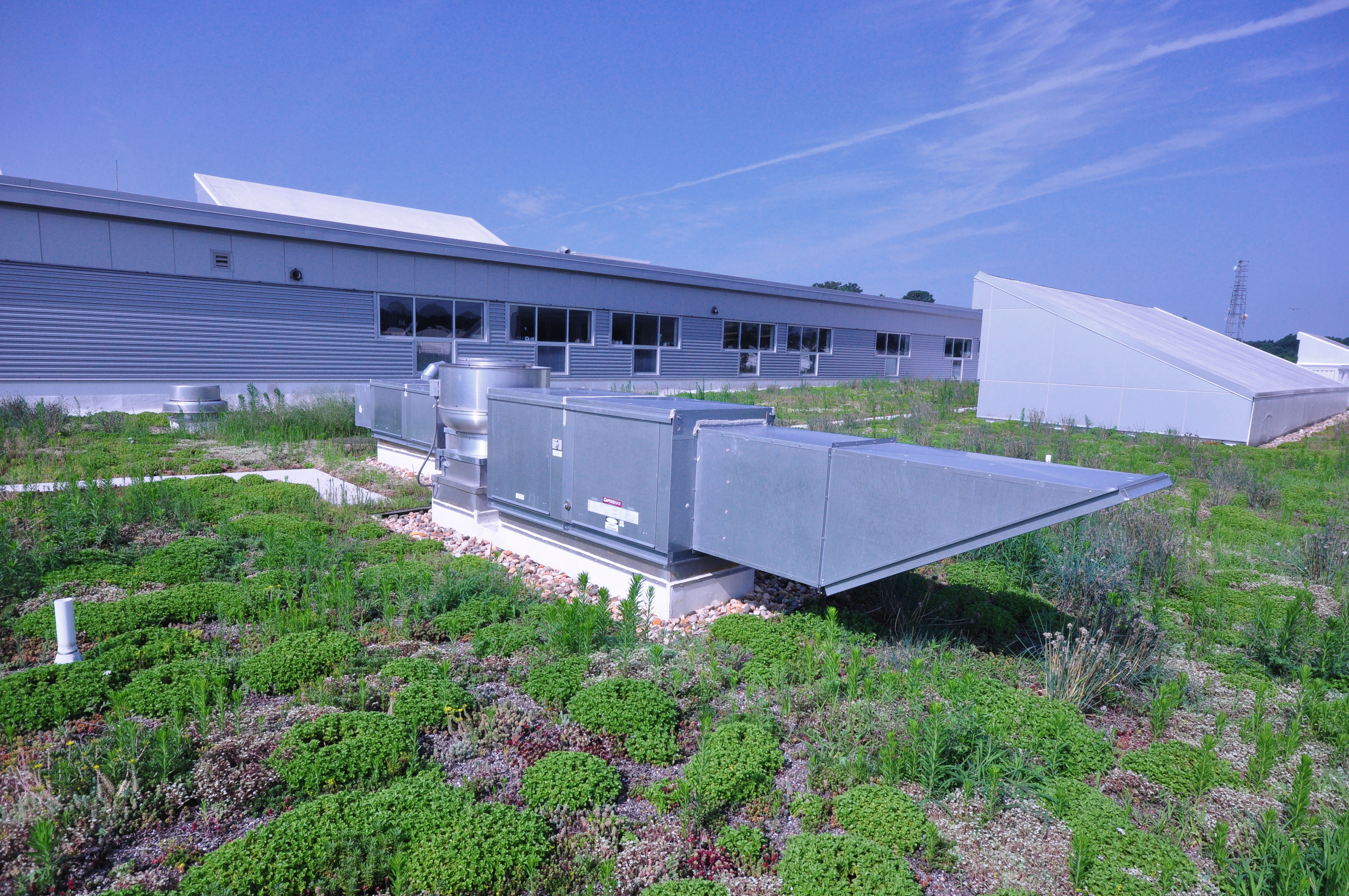
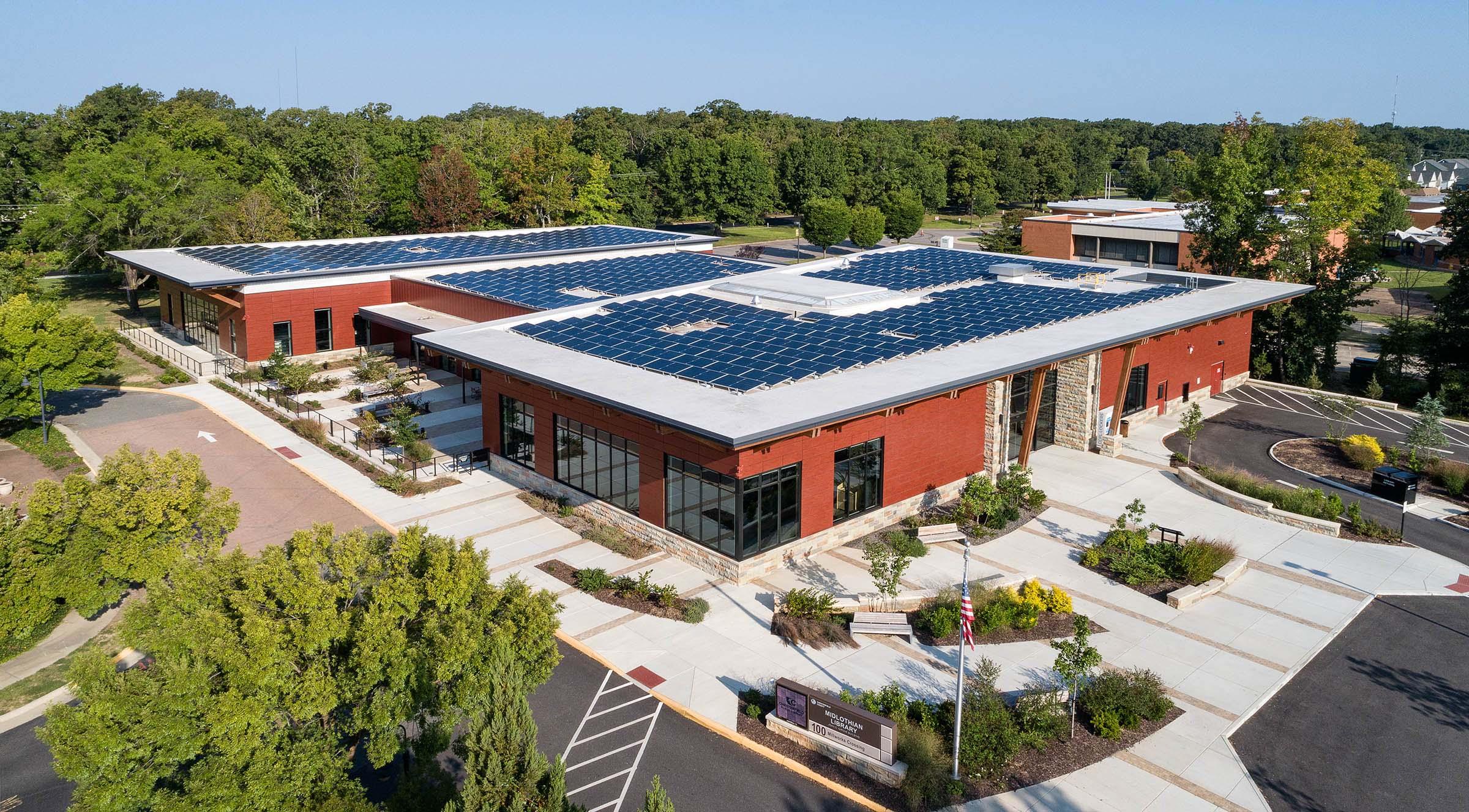
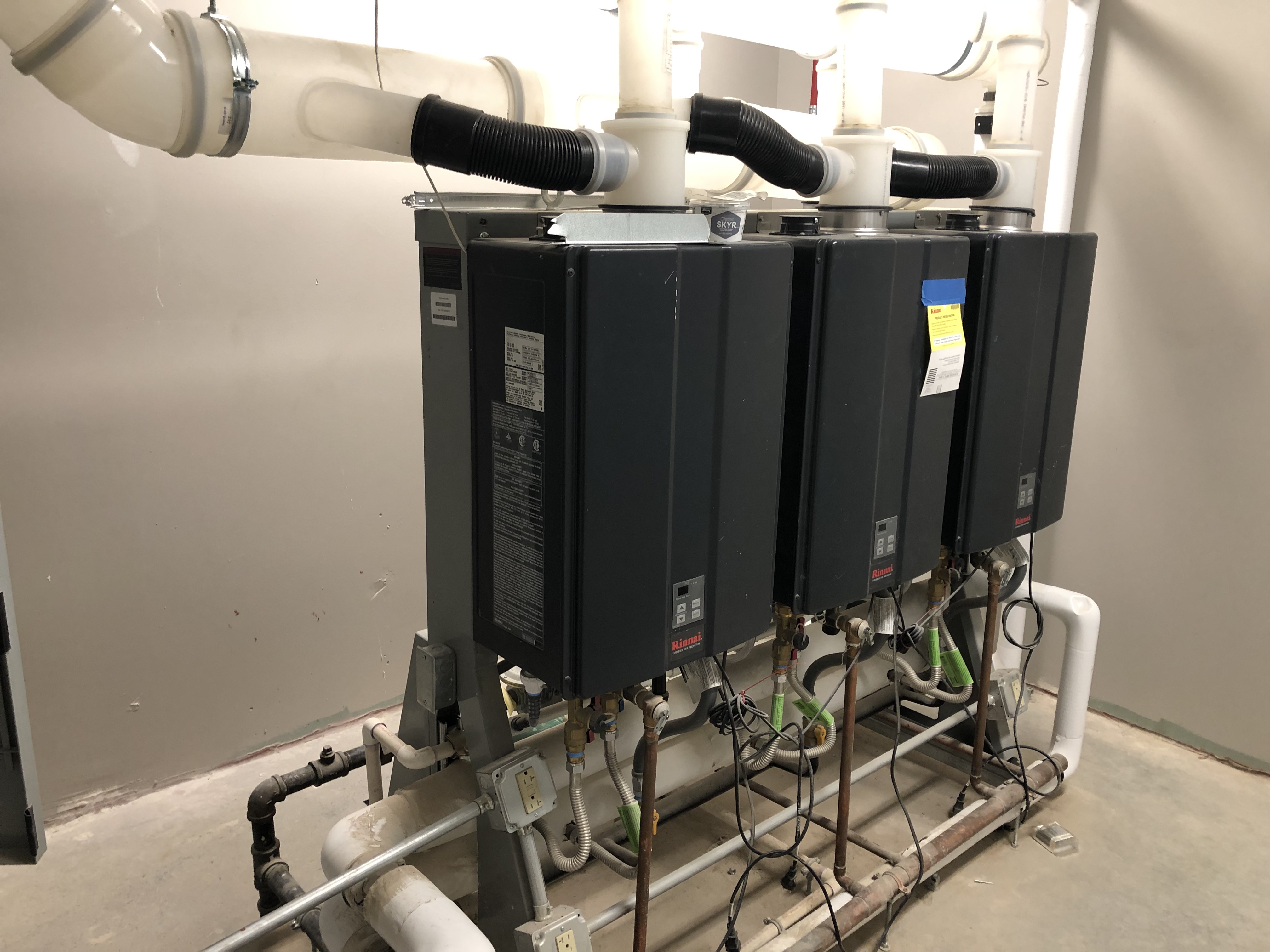
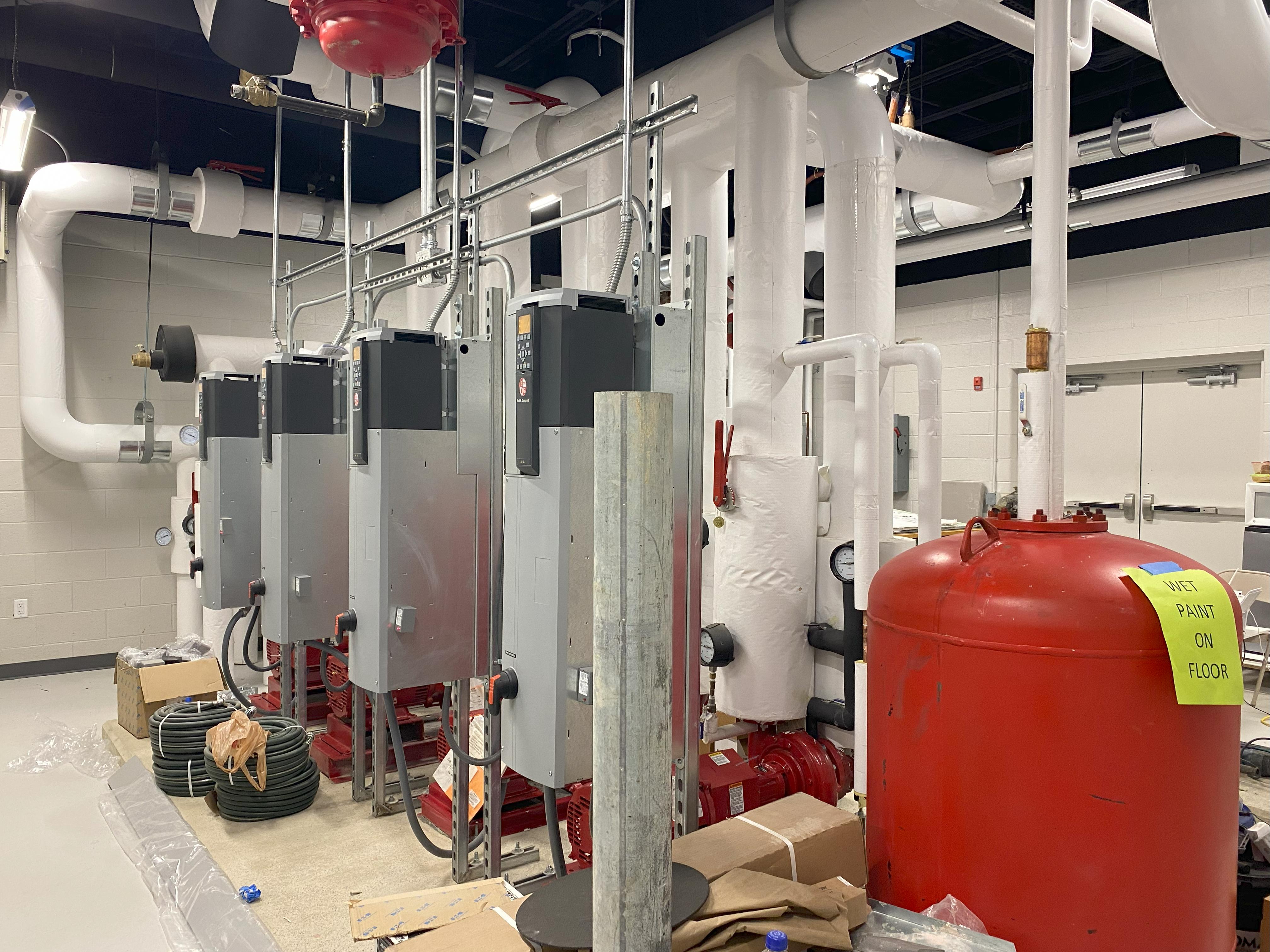
Sustainable performance looks different on every project.
These examples highlight strategies that reduce energy use, improve efficiency,
and support long-term building performance.

Integrated performance from vision to operations
Sustainable outcomes are achieved through a coordinated process that begins with project goals and continues through design, construction, commissioning, and long-term building operation.
Planning
We help define sustainability goals early so performance expectations, budget realities, and long-term operational needs are aligned from the start.
Design
Our team integrates efficient systems, energy-conscious strategies, and practical design decisions into coordinated building solutions.
Construction
We support the construction process with responsive coordination, field insight, and attention to how sustainable strategies are implemented.
Commissioning
Systems are reviewed, tested, and verified to help ensure buildings perform as intended once they are occupied.
Operations
Our approach considers long-term maintenance, system performance, energy use, and the realities of operating the building over time.
Comparing System Performance
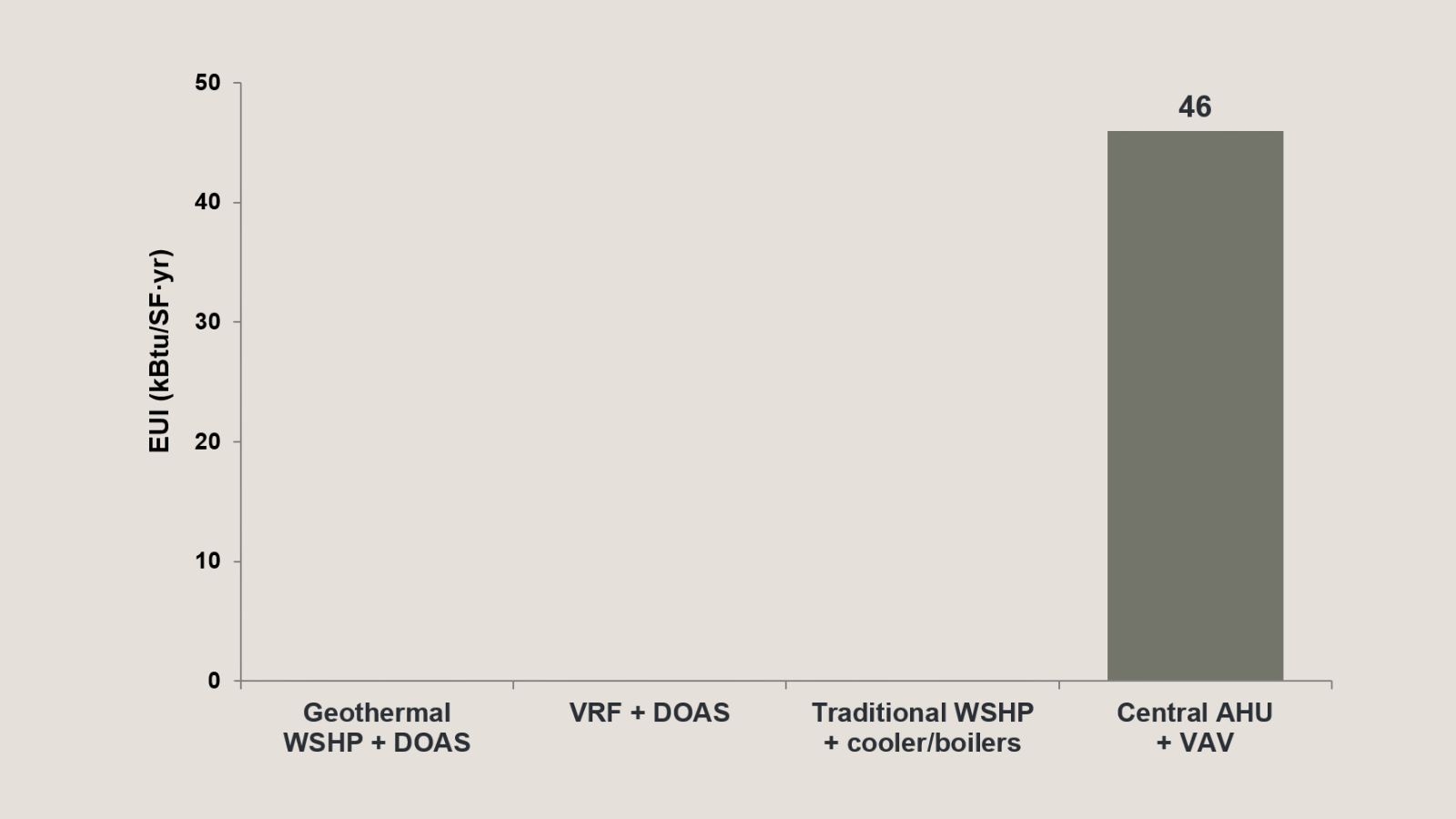
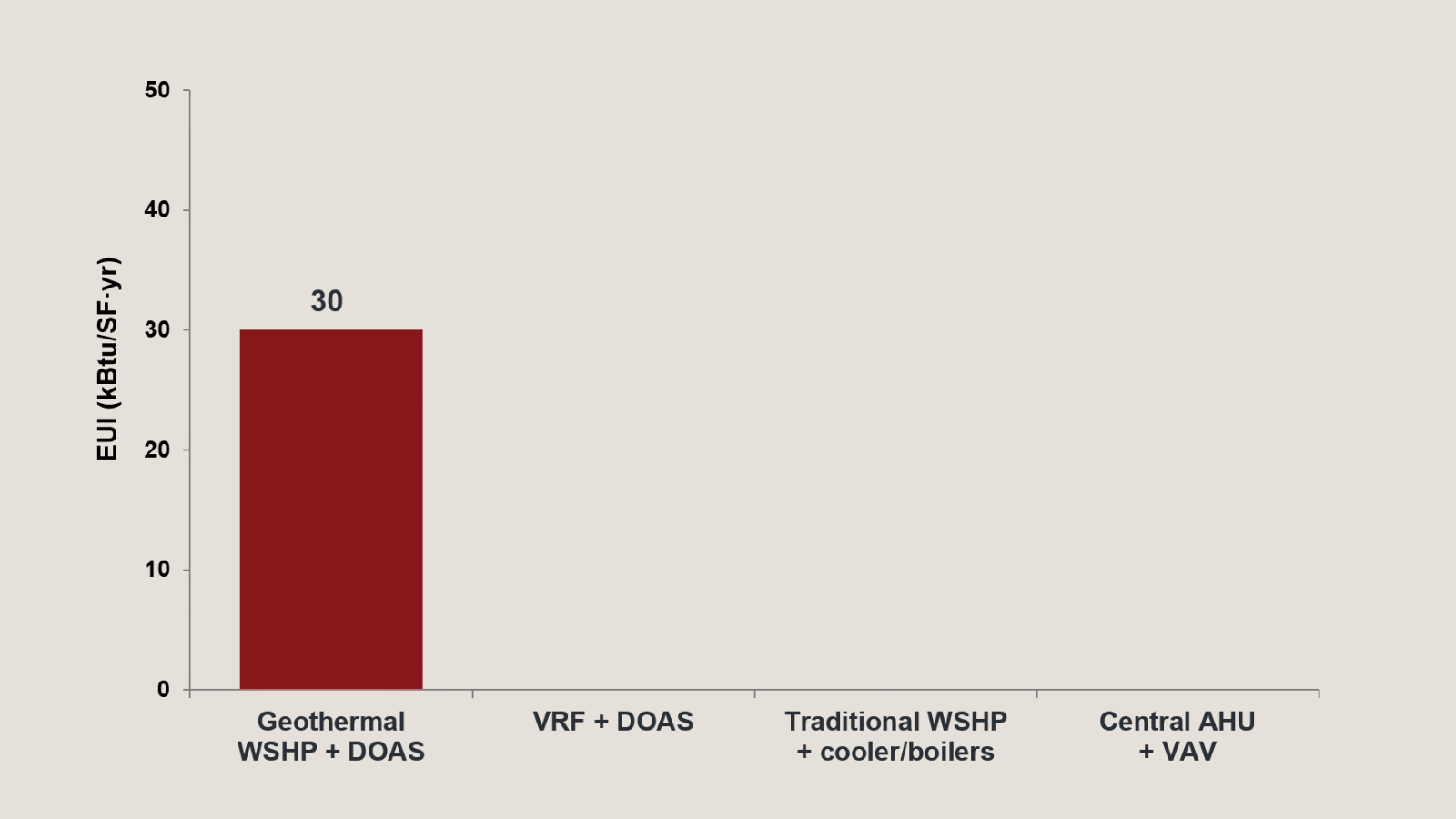
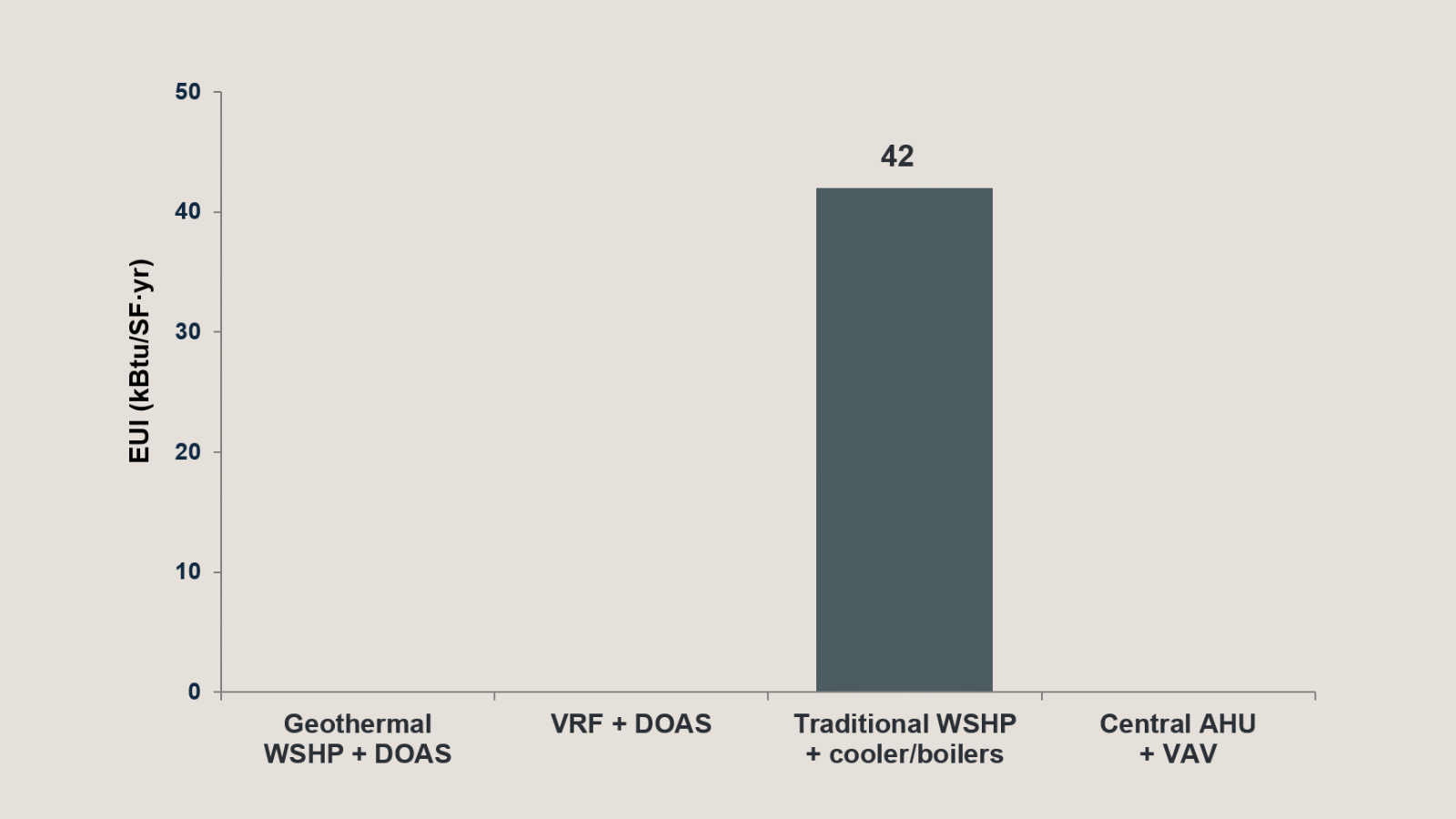
System selection plays a major role in energy use, operating cost, and long-term building performance. These comparisons help illustrate how different strategies can support sustainability goals.
Geothermal Water Source Heat Pump
Geothermal water source heat pump systems use stable ground temperatures to support efficient heating and cooling with reduced energy demand.
Traditional Water Source Heat Pump
Traditional water source heat pump systems offer flexible, reliable zone-level control while supporting efficient building operation.
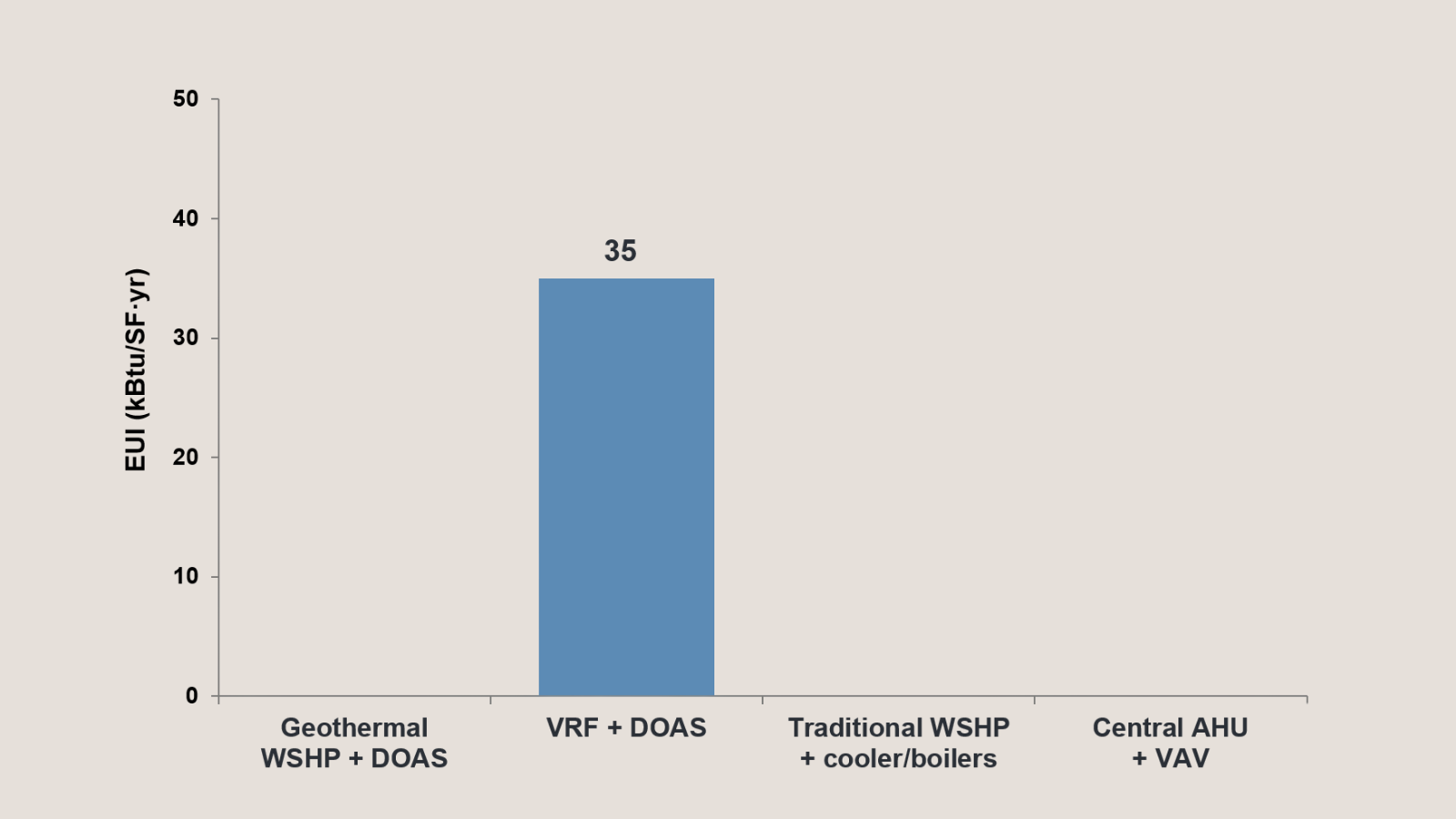
Variable Refrigerant Flow Systems
Variable refrigerant flow systems provide targeted heating and cooling by adjusting refrigerant flow to meet changing zone demands.
Central AHUs with VAV Terminals
Central air handling units with VAV terminals allow larger buildings to distribute conditioned air efficiently based on occupancy and demand.